Heredotos (Historician of Halikarnassos)
|
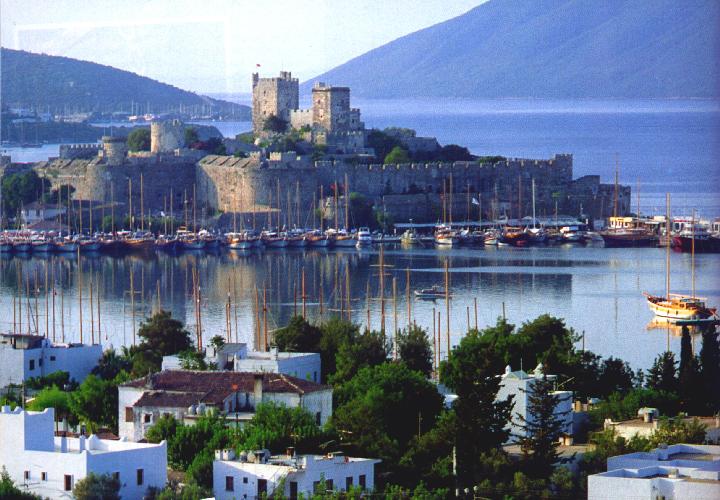
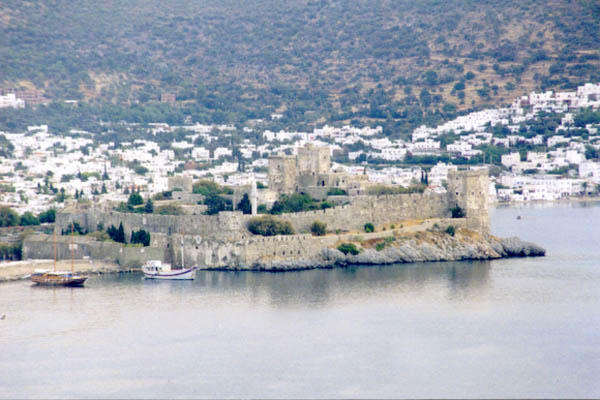
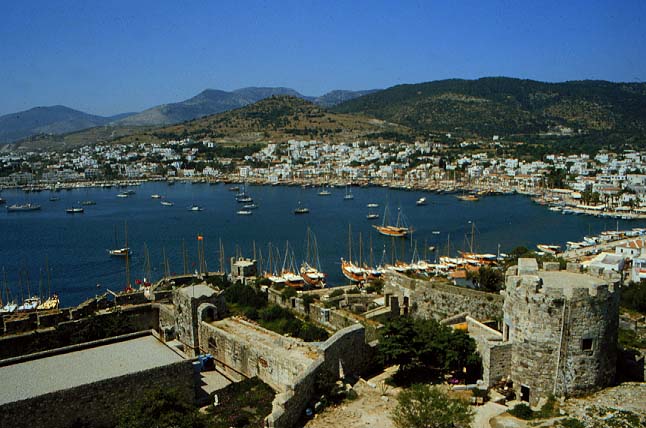 Bodrum Castle and Harbor
|
|
|
http://www.seyahatname.150m.com/
Ancient Remains
Of the antiquities that once existed in Bodrum and its environs, many have disappeared, be it due to the ravages of time or nature or the hand of man. A considerable number of them have also been removed from the country ÃÆâ€ââ€Â¢ÃƒÆ’ƒâ€šÃ‚¢ÃƒÂ¢Ã¢â‚¬Å¡Ã‚¬Ã¢â‚¬Å“ sometimes legally, sometimes not. A good case in point is the Mausoleum. The building survived more or less intact until the 14th century, when a massive earthquake reduced it to rubble. The following century, much of its material was scavenged for the building of the Castle of St. Peter. In the 19th century, fine examples of the MausoleumÃÆâ€ââ€Â¢ÃƒÆ’ƒâ€šÃ‚¢ÃƒÂ¢Ã¢â‚¬Å¡Ã‚¬Ã¢â€žÂ¢s sculptural reliefs that were turned up in the course of excavations were taken to the British Museum. (During this century Cevat Sakir Kabaagacli, the Fisherman of Halikarnas, once wrote Queen Elizabeth explaining that the beauty of these reliefs shone under the bright blue sky of Bodrum telling her how much it pained him that the sculptures should have to suffer the damp and cloudy weather of London. He said that they never should have been allowed to leave their native land. The letter was forwarded to the museumÃÆâ€ââ€Â¢ÃƒÆ’ƒâ€šÃ‚¢ÃƒÂ¢Ã¢â‚¬Å¡Ã‚¬Ã¢â€žÂ¢s director who sent Kabaagacli a reply thanking him for his interest and advice. Acting upon it, they had painted the ceiling of the hall in which the sculptures were on display ÃÆâ€ââ€Â¢ÃƒÆ’ƒâ€šÃ‚¢ÃƒÂ¢Ã¢â‚¬Å¡Ã‚¬Ã…“Bodrum blueÃÆâ€ââ€Â¢ÃƒÆ’ƒâ€šÃ‚¢ÃƒÂ¢Ã¢â‚¬Å¡Ã‚¬Ã‚ and, yes, they really did look better!)
Above the land
The Mausoleum itself is the monumental tomb of King Mausolos of Caria, known as the Mausoleion in Greek. It was built at the orders of Queen Artemisi II, the wife (and also sister) of Mausolos, who died in 353 BC. Five of the most famous sculptures of the day ÃÆâ€ââ€Â¢ÃƒÆ’ƒâ€šÃ‚¢ÃƒÂ¢Ã¢â‚¬Å¡Ã‚¬Ã¢â‚¬Å“ Scopas, Bryaxis, Thimoteus, Leochares, and Pytheos were commissioned to do the sculptures. Standing 42m high and 133.5m at the base, this square monument was built with the finest marbles and workmanship and was elaborately decorated. The tomb stood on an artificially raised terrace measuring 105 by 242m that was enclosed by a sanctuary wall of white marble. The monument survived for more than a millennium and a half until it was struck by a tremendous earthquake on 8 August 1304. Today its site is occupied by a small museum that provides only a pale echo of the original. (one of the seven wonder of the world)
Compared with other bits of Halikarnassos, the cityÃÆâ€ââ€Â¢ÃƒÆ’ƒâ€šÃ‚¢ÃƒÂ¢Ã¢â‚¬Å¡Ã‚¬Ã¢â€žÂ¢s theater has had considerably more luck. Plainly visible on the hill known as Goktepe, its location was never in doubt. About two decades ago Prof. Umit SerdarogluÃÆâ€ââ€Â¢ÃƒÆ’ƒâ€šÃ‚¢ÃƒÂ¢Ã¢â‚¬Å¡Ã‚¬Ã¢â€žÂ¢s excavations of the theater revealed essentially what we see today. (There has been some restoration work in recent years). Located above the road between Bodrum and Turgutreis, this theater is Hellenistic in style but archeologists say that the original structure is much older and goes back to the 4th century BC. The theater measures 110m wide and 53 rows of its seats have survived along with most of the stage building.
Below the Sea
The Bodrum Museum of Underwater Archeology is one of the biggest and most important institutions of its kind in the world today. Investigations that began in the 1960s subsequently developed into a systematic survey of the area that has yielded up a rich trove of finds that are now on display in the Bodrum Castle Museum.
It all began when Kemal Aras, a local sponge-fisherman, diver, and captain guided Professor George Bass, the doyen of modern underwater archeology, and Haluk Elbe, the founder of the Bodrum Museum, to the first underwater wreck. They were the first to devote their lives to recovering the historical treasures lying at the bottom of the sea in the name of science. They were succeeded by Oguz Alpozen, Harun Ozdas, and Bahadir Berkaya and they in turn by many more.
Seytan Deresi (ÃÆâ€ââ€Â¢ÃƒÆ’ƒâ€šÃ‚¢ÃƒÂ¢Ã¢â‚¬Å¡Ã‚¬Ã…“DevilÃÆâ€ââ€Â¢ÃƒÆ’ƒâ€šÃ‚¢ÃƒÂ¢Ã¢â‚¬Å¡Ã‚¬Ã¢â€žÂ¢s CreekÃÆâ€ââ€Â¢ÃƒÆ’ƒâ€šÃ‚¢ÃƒÂ¢Ã¢â‚¬Å¡Ã‚¬Ã‚ÂÂÂÂÂ) discharges into Mazi cove on the northern shore of the Gulf of Gokova located on the southern side of the Bodrum peninsula. Work here began when a sponge-diver by the name of Cumhur Ilik brought a number of finds that he had come across to the museum in 1973. Initial finds strongly suggested that the wreck dates to the 17th century BC. Despite the passage of years, not all of its mysteries have been completely resolved but the finds prove that Minoan traders on their way to Miletos had close dealings with people living in the vicinity of Beycesultan, a town located far inland.
Yassiada is an island off Turgutreis between the mainland and the island of Pserimo. The island is featureless and flat and it is surrounded by treacherous shoals that are littered with wrecks, one that went down as long ago as the 4th century and another as recently as 1993. One of these wrecks is a Byzantine ship that sank in the 7th century. Another wreck from this area is a vessel that went down in the late 4th century. She was carrying about 1,100 amphoras in her hold and the discovery of four oil lamps with the trademark of an Athenian manufacturer enabled researchers to date the wreck more precisely than is usually more possible.
Turkcell & Ericsson Turkiye - Bringing BodrumÃÆâ€ââ€Â¢ÃƒÆ’ƒâ€šÃ‚¢ÃƒÂ¢Ã¢â‚¬Å¡Ã‚¬Ã¢â€žÂ¢s history back to life
Today, important archaeological and scientific research rely increasingly on the support of sponsors. Turkcell is well aware of its obligations and the company has sponsored many projects in areas ranging from the arts and science to archeology. One of these is the project to restore sections of the Halikarnassos City Walls sponsored jointly with Ericsson Turkiye. Those sections chosen for the project include the Myndos Gate and a later Ottoman tower.
The Myndos Gate
In 377 BC, King Mausolos of Caria relocated his capital to Halikarnassos. For protection, he had seven kilometers of defense walls built around the city, pierced only by two gates. The Mylasa Gate no longer exists while the Myndos Gate to the west had until recently been reduced to a sorry ruin.
The Myndos gate entered history in 334 as the means by which Alexander the Great and his conquering army entered the town after a three month seige and a final bloody battle.
The project to restore the Myndos gate began in 1998. Now thanks to sponsorship from Ericsson Turkiye and Turkcell, the Myndos Gate and walls that once played such a crucial role in the fate of the city are slowly rising once again amidst their newly-landscaped surroundings. In the future it is planned that the newly restored, gate will be used as a backdrop for arts and cultural events in Bodrum.
The Ottoman Tower
The second stage of the Halikarnassos City Wall Restoration project includes the restoration and landscaping of the entrance to the former Ottoman Shipyard, and the neighboring cemetery located at Bodrum Harbor.
The shipyard is thought to have been built around 1775 and is known to have been responsible for the construction of many warships for the Ottoman navy. In the early 1900s, walls and three towers were constructed around the shipyard to protect against pirates then active in the Aegean.
This project is being realized as part of the celebrations to mark the 700th anniversary of the birth of the Ottoman Empire.
|
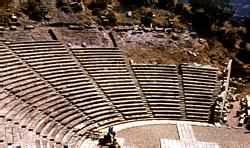 Halicarnassos Theather
|
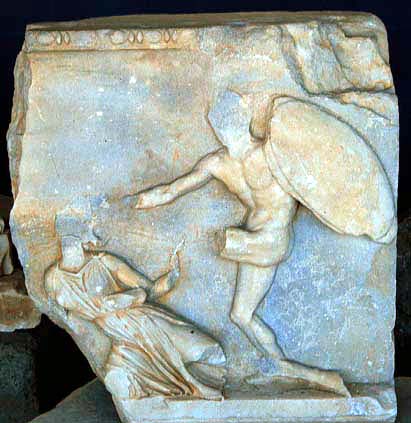 A piece of relief remains from Halikarnassoso Mouseleion (It isn't stand under its home sky, it's in The British Museum now))
|
|
|
|
|
Petronium (Bodrum Castle)
|
|
|
|
|
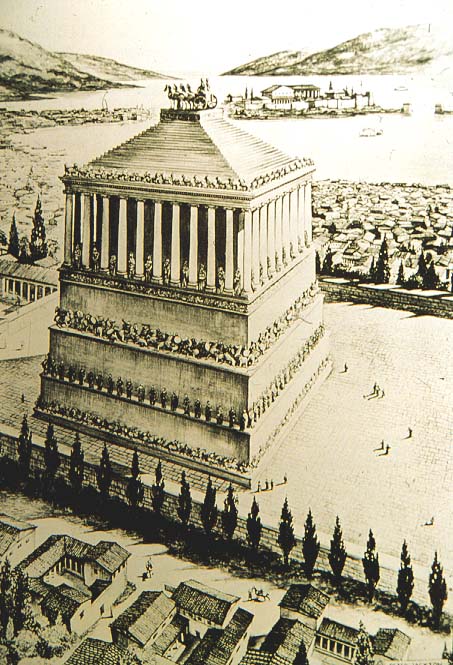 Reconstriction of Halikarnassos Mouseleion
|
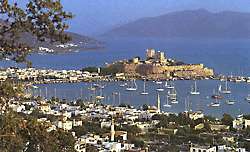 A general scene of Bodrum
|
|
|
|
 On Deck..
|
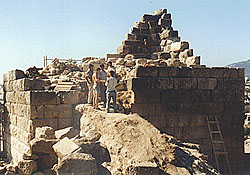 Myndos Gate
|
|
|
|
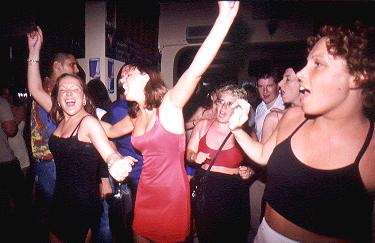 Night Life in Bodrum..
|
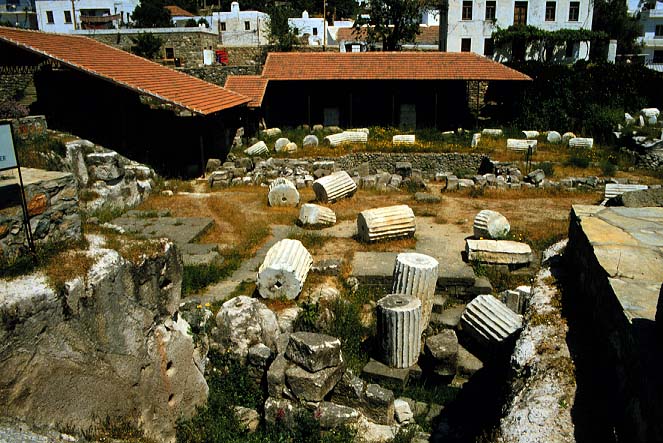 Remains of Mouseleion
|
|
|
|
|