www.celalaydik.20m.com/photo5/html
WHERE IS ISTANBUL
Istanbul
Istanbul is the largest city in the Republic of Turkey. It is situated on the shores of the Bosphorus, and is bordered to the north by the Black Sea, to the east by the region of Kocaeli and the Marmara Sea and to the west by Tekirdag and the Kirklareli region. The city covers a total area of 5712 km2 including, within the urban district, the islands of the Marmara known as the Princes Islands. It is flanked by a high range of hills to the east of the Bosphorus, the highest of which is Aydos (573m.) near Kartal. ÃÆâ€ââ€Â¢ÃƒÆ’ƒâ€ Ã¢â‚¬ââ€Â¢ÃƒÆ’¢â‚¬Â¡amlica hill (229 m.) east of ÃÆâ€ââ€Â¢ÃƒÆ’ƒâ€ Ã¢â‚¬ââ€Â¢ÃƒÆ’…“skÃÆâ€ââ€Â¢ÃƒÆ’ƒâ€ Ã¢â‚¬ââ€Â¢ÃƒÆ’‚¼dar, is a recognised tourist spot. Forests surround the city sporadically, the most extensive being the Belgrad Forest which is 20 kms, to the north of the city.
Istanbul winters are warm and wet, summers hot and dry. The climate is tempered by warm Mediterranean winds which counter frequent Black Sea cold fronts. Temperatures vary moderately between day and night, and from season to season. The summer season is approximately 90 days long, while winter is 80 days long. Snow fails for an average of 7 days in a year.
The largest river in the region is the Riva, which flows into the Black Sea. In addition there are two rivers flowing into the Bosphorus. Istinye river and BÃÆâ€ââ€Â¢ÃƒÆ’ƒâ€ Ã¢â‚¬ââ€Â¢ÃƒÆ’‚¼yÃÆâ€ââ€Â¢ÃƒÆ’ƒâ€ Ã¢â‚¬ââ€Â¢ÃƒÆ’‚¼k river. The region also boasts three small but notable lakes, all on the European shores of the Bosphorus. These are the fresh-water Terkos, which supplies the city with much of its water, and the inland seas of KÃÆâ€ââ€Â¢ÃƒÆ’ƒâ€ Ã¢â‚¬ââ€Â¢ÃƒÆ’‚¼ÃÆâ€ââ€Â¢ÃƒÆ’ƒâ€ Ã¢â‚¬ââ€Â¢ÃƒÆ’‚§ÃÆâ€ââ€Â¢ÃƒÆ’ƒâ€ Ã¢â‚¬ââ€Â¢ÃƒÆ’‚¼k ÃÆâ€ââ€Â¢ÃƒÆ’ƒâ€ Ã¢â‚¬ââ€Â¢ÃƒÆ’¢â‚¬Â¡ekmece and BÃÆâ€ââ€Â¢ÃƒÆ’ƒâ€ Ã¢â‚¬ââ€Â¢ÃƒÆ’‚¼yÃÆâ€ââ€Â¢ÃƒÆ’ƒâ€ Ã¢â‚¬ââ€Â¢ÃƒÆ’‚¼k ÃÆâ€ââ€Â¢ÃƒÆ’ƒâ€ Ã¢â‚¬ââ€Â¢ÃƒÆ’¢â‚¬Â¡ekmece on the Marmara coast, which are salt water lagoons. Fish are found in both these lakes, which are situated in game areas.
The city, whose population is about 12 million, is a major port and trade center. It is the most important city in Turkey, possessing a number of universities, high schools, libraries and cultural centers. The city is an impressive sight, situated, as it is, on a site dominating both the Golden Horn and the Bosphorus ,and brimming with fine monuments and artifacts of the Byzantine and Ottoman era.
Up to the Turkish conquest of Istanbul by Mehmet II in 1453, the city was the center of the Byzantine empire. After that date it became the center of the Ottoman Empire. After the founding of the Turkish Republic in 1923, the capital of Turkey became Ankara.
ISTANBUL IN HISTORY
Prehistory
They lived in both the Anatolian and European sides of the city. They were nomadic or semi nomadic. They later established a stable life based on fishing, agriculture and cattle growing. For example, Fikirtepe research has discovered that dogs, sheep, goats, cows and pigs were domesticated and that fishing was done as early as 6000 BC. Some tombs and stone tools were found during these excavations.
Istanbul became very populated residence around 3000 BC. Some small town governments were established during that period of time. Researches have shown that todayÃÆâ€ââ€Â¢ÃƒÆ’ƒâ€šÃ‚¢ÃƒÂ¢Ã¢â‚¬Å¡Ã‚¬Ã¢â€žÂ¢s Sultanahmet square and its surroundings were main residential areas at that time.
Roman Empire
The sovereignty of the Romans over the Byzantine was partially at their own consent. Fed up with being the focus of a long lasting conflict between Bithynia and Macedonia in the 2nd century BC. Byzantium joined with Kyzikos and Rhodos in calling on Rome for aid. It became a subject of the Roman Empire in 146 BC. Formerly self administered, it became a part of the Bithynia - Pontius province, thus maintaining its importance but losing the city-state status it had enjoyed for 700 years.
Sheltered by the Roman administration, Byzantium experienced a 350 years period of relative peace broken only by the Septimus Severus and Pescennius Niger civil war in the 2nd century AD. The Byzantines had supported Pescennius and following his defeat, Septimus wrecked his revenge on the city by massacring many of its inhabitants, burning the city on an even grander scale and Byzantium once again entered a period of relative calm, lasting up until the period of Constantine the Great.
In 330 AD, the Roman Emperor, Constantine I, proclaimed the ancient city of Byzantium as his capital. The newly rebuilt city subsequently became known as Constantinopolis. The imperial city became one on the most prominent political and religious centers in Christendom during the reign of Constantine, who was said to have been baptised as a Christian on his death bed.
Througout the 4th and 5th centuries, the city became a target of attack, especially by Goth and Vizigoth warriors. Attila the Hun besieged Constantinople in 440 and for ten years extracted taxes from its residents. During this period of chaos, sactarian arguments occasionally escalated into riots and civil wars. In spire of civil unrest, Constantinople managed to retain its international reknown. The cityÃÆâ€ââ€Â¢ÃƒÆ’ƒâ€šÃ‚¢ÃƒÂ¢Ã¢â‚¬Å¡Ã‚¬Ã¢â€žÂ¢s population exceeded that of Rome, especially after the huge wave of Thracian immigrants in the 5th century. It was during this time that the outlying busurb of Sycae was created (todayÃÆâ€ââ€Â¢ÃƒÆ’ƒâ€šÃ‚¢ÃƒÂ¢Ã¢â‚¬Å¡Ã‚¬Ã¢â€žÂ¢s Galata); it grew to accomodate the influx of immigrants and became a significant trading site, connected to the metropolis via a bridge. The Western Roman Empire, on the other hand, was in decline. In 476, the Ostrogoths dethroned Romulus Augustine, the Roman Emperor of the West. Constantinople was soon to become the sole capital of the Roman Empire.
Byzantine Empire
After the fall of the Western Roman Empire in 476, the Eastern Roman Empire of which Constantinople was the capital, became the Byzantine Empire. Thus, Istanbul was transformed from a "Roman City" to a somewhat Orthodox one, with an eastern accent.
The mid-sixth century marked the beginning of an enlightened age for the Byzantine Empire, and thus, for Istanbul. In contrast with his predecessor, who was not even literate, Emperor Justinian I. was an educated and religious man. During his reign the city prospered as an Orthodox Christian capital. St. SofiaÃÆâ€ââ€Â¢ÃƒÆ’ƒâ€šÃ‚¢ÃƒÂ¢Ã¢â‚¬Å¡Ã‚¬Ã¢â€žÂ¢s Church was reconstructed in this period.
However, the plague of 543 killed almost half of the cityÃÆâ€ââ€Â¢ÃƒÆ’ƒâ€šÃ‚¢ÃƒÂ¢Ã¢â‚¬Å¡Ã‚¬Ã¢â€žÂ¢s popullation, disaster followed disaster. Fortunately, the infrastructure built by Emperor Justinian I. had made the city fairly resilient agains manner of catastrophes and wars. The late 7th and 8th centuries became years of siege. In the 7th century, Istanbul was attacked by both Persian and Avars. Later, in the 8th century, Hungarian and Muslim Arabs besieged the city. Russian and Hungarian forces, in the 9th century, also tried to conquer this desirable metropolis.
Meanwhile, sectarian conflicts among Christians had become violent, fuelled by the politics of the Emperor who took a decisive position in the matters. The pro/anti - iconography which divided the population bore a tremendous impact, not only on the city, but on the entire empire and on Christian theology in particular. IstanbulÃÆâ€ââ€Â¢ÃƒÆ’ƒâ€šÃ‚¢ÃƒÂ¢Ã¢â‚¬Å¡Ã‚¬Ã¢â€žÂ¢s thriving era was eclipsed by Latin occupation.
In 1204 the city was conquered by the Crusaders and was looted mercilessly. The largest city of the Middle Ages, with a population of nearly 500.000 laid impowerished, and in ruins.
The Latin Invasion
The Emperor Alexius rejoiced at the coming of the first crusaders, hoping to regain lands lost in Malazgirt. The agreement was for the Byzantines to support the crusaders and occupy lands taken from the Muslims. The crusaders didnÃÆâ€ââ€Â¢ÃƒÆ’ƒâ€šÃ‚¢ÃƒÂ¢Ã¢â‚¬Å¡Ã‚¬Ã¢â€žÂ¢t go along with the plan and founded the Eastern Catholic Kingdom in Jordan in 1099. The crusaders were despised by the residents of Istanbul who openly showed their disfavour. Meanwhile, the crusades continued and the fourth crusade ended in the invasion and dividing up Istanbul.
During that period there was a great deal of dissension as to the succession to the throne. The crusaders, realising their opportunity, entered the Golden Horn with the aid of the Venetian. The attack began on 9 April and the city fell on 13 April. For three days, in an unprecedented example of barbarism, Istanbul was looted and the inhabitants were murdered. Many important structures, including Hagia Sophia were damaged and the books that were hundred years old were burned. Important Byzantine works of art were taken to Europe. The looting became routine and the crusaders joined with the Venetian to divide Byzantium among themselves, founding the Eastern Catholic Empire.
Muslim Sieges of Istanbul
Istanbul had been a valuable target since the beginning of the military campaigns of the Muslims. First Muslim Arabs, then Muslim Turks launched numerous military campaigns against Istanbul and besieged the city during some of those campaigns.
The first Muslim military campaigns against Istanbul took place during the reign of Caliphate Uthman. Muawiya, the governor of Syria prepared his navy for the first maritime campaign against Istanbul. This navy fleet beat the Byzantine navy and opened the sea passage to Muslims.
Muslims conducted the first Istanbul siege in 668, during the reign of Muawiya. the siege continued until the spring of 669, but the army couldnÃÆâ€ââ€Â¢ÃƒÆ’ƒâ€šÃ‚¢ÃƒÂ¢Ã¢â‚¬Å¡Ã‚¬Ã¢â€žÂ¢t conquer the city. Epidemics killed many soldiers and army had to withdraw. Ebu Eyyub El Ensari, the flag bearer of the Prophet Mohammed was killed during this siege and buried at the bottom of the city walls. According to a popular rumor, his tomb was found by Sheikh Akshemseddin who had visualized its location in his dream, during the conquest of the city by Sultan Mehmed The Conqueror. A mosque was later built at that location.
After this first campaign, Muawiya sent a new navy in 673. The navy entered the Marmara Sea in 674. but the siege which took 7 years was unsuccessful. Another siege, led by Maslama Bin Abdul Malik from August 716 to September 717 was also unsuccessful. He lost the majority of his troops, because of weather conditions, hunger, illness and attacks by Bulgarian guerillas. Some historical sources mention that the Emperor Leon III opened a mosque for Muslim prisoners of war at the request of Maslama and that he toured the city with Maslama after the siege was lifted.
The last siege by Arabs occured in 781 - 782 by the army under the command of Harun who was the son of the sultan of Abbasi Dynasty, EL Mahdi. harun beat the Byzantine army at Izmit and reached Uskudar and besieged the city. He signed a treaty after siege and returned back home.Harun Ar-Rashid was then crowned as Abbasi Sultan and was honored with "Ar-Rashid" title because his Istanbul campaign.
Besides these sieges there were also other campaigns waged by the musim Arabs against Istanbul.
Istanbul Before The Conquest
Prior to the fall of Istanbul to the Ottomans, Byzantium had lost its status as a powerful empire: its land mass holdings had shrunk to the territories of Constantinople, Silivri Castle on the Marmara Shore and several small towns, such as Vize and Misivri. These sites were completely surrounded by Ottomans and the villages just beyond the Constantinople fortresses were left untouched by the Ottomans not because they were strong, but because they were considered insignificant. Constantinople wes the target.
The Byzantine emperors had accepted the sovereignity of the Ottomans and were paying tribute taxes to the Ottomans. In reality,then, the Ottomans were dealing not with Byzantine emperors but with minor Tekfurs (Byzantine princes). In essence, then, the domination of Byzantium was not that of an empire and that Constantinople was more a religious center than the sea of an empire. It was the last and the most powerful stronghold of Christendom in the face of Islam and mounting Muslim military forces. To circumvent its fall, the Pope organised a new Crusade.
However, having been stunned by Ottoman attacks, ByzantiumÃÆâ€ââ€Â¢ÃƒÆ’ƒâ€šÃ‚¢ÃƒÂ¢Ã¢â‚¬Å¡Ã‚¬Ã¢â€žÂ¢s most debilitating internal problem was exposed : the rift between Orthodox and Catholic Christians. This division led to insufficient assistance from Europe to defend the crippled empire. In a desperate effort to unify the factions, the Emperor and Patriarch gave in, and in 1439 at the Florance Council, knelt down and offered their allegiance to the Catholic Church, who, with the eminent Ottoman thread, put aside their hundred-year-old conflict and differences. The formal celebration of the agreement was to become the subject of mass protests, however, as the people of Constantinople feared European involvement and sought to defray the resurrection of another Latin era.
After the Florence Council agreement, the powerful Crusade that was formed launched an attack on Rumeli in 1443 and 1444. However, the Ottoman victory at Varna was able to stop the tide of invading Crusaders. Varna was also the battle that determined the fate of Constantinople. Now, the conquest of the city became compelling for the young empire, who perceived Constantinople as an ailing element in the heart of Ottoman land. the decisive link between Rumeli and Anatolia spelt the fall of Constantinople and the rise of Istanbul.
The Conquest of Istanbul
Preparation for the conquest of Istanbul started only one year ahead. Huge cannons that were necessary for the siege were moulded. In 1452, Rumeli Castle was constructed to control the Bosphorus. A mighty fleet of 16 galleries was formed. The number of the soldiers were doubled. The supply routes to Byzantine were taken under control. An agreement was made with Genoese to keep Galata impartial during the war. In April 1453, the first Ottoman frontier forces were seen in front of Istanbul. The siege was starting.
6 April 1453 Sultan Mehmed pitched his imperial tent by the door of St. Romanus in Topkapi. The same day the city was besieged from the Golden horn to the Marmara Sea from the land.
6-7 April 1453 First cannons were fired. Some of the fortresses in Edirnekapı were destroyed.
9 April 1453 Baltaoğlu SÃÆâ€ââ€Â¢ÃƒÆ’ƒâ€ Ã¢â‚¬ââ€Â¢ÃƒÆ’‚¼leyman Bey launched the first attack to enter the Golden Horn gulf.
9-10 April 1453 Some of the fortresses on bosphorus were taken. Baltaoğlu SÃÆâ€ââ€Â¢ÃƒÆ’ƒâ€ Ã¢â‚¬ââ€Â¢ÃƒÆ’‚¼leyman Bey seized the Marmara Islands.
11 April 1453
12 April 1453 The Ottoman fleet attacked the ships protecting the Golden Horn. The victory of the Christian ships decreased the morale of the Ottoman army.At the order of Sultan Mehmed, the Byzantine ships were pounded by mortar fire, and one galley was sunk.
18 April 1453 At night, the Sultan gave his first crucial order. The attack lasted 4 hours but it was scattered.
20 April 1453 A naval skirmish took place close to Yenikapi between the Ottoman fleet and 4 Byzantine warships with three supply ships full of food and weapons sent by the Papacy. the Sultan came to the shore himself and ordered Baltaoğlu SÃÆâ€ââ€Â¢ÃƒÆ’ƒâ€ Ã¢â‚¬ââ€Â¢ÃƒÆ’‚¼leyman Pasha to sink those ships by any means possible. The Ottoman fleet could not stop enemyÃÆâ€ââ€Â¢ÃƒÆ’ƒâ€šÃ‚¢ÃƒÂ¢Ã¢â‚¬Å¡Ã‚¬Ã¢â€žÂ¢s ships which were bigger. With this failure the Ottoman army lost its morale and showed the signs of defeat. Ottoman soldiers started defecting from the army. Soon, the Byzantine Emperor wanted to take advantage of this situation and offered peace.
The offer, supported by famous Vizier ÃÆâ€ââ€Â¢ÃƒÆ’ƒâ€ Ã¢â‚¬ââ€Â¢ÃƒÆ’¢â‚¬Â¡andarlı Halil Pasha, was rejected by Sultan Mehmed. The siege and bombardment of the fortresses with cannons continued.
During this chaos and widespread feeling of defeat, a letter from the SultanÃÆâ€ââ€Â¢ÃƒÆ’ƒâ€šÃ‚¢ÃƒÂ¢Ã¢â‚¬Å¡Ã‚¬Ã¢â€žÂ¢s spiritual teacher Akshemseddin promised good news about the conquest. Encouraged by this spiritual support, Sultan Mehmed escalated the attack and decided to add an element of surprise: the Ottoman fleet anchored in Dolmabahce would be moved to the Golden Horn gulf by land.
22 April 1453 In early hours of the morning, Byzantine Christians were dumbfounded and horrified when they saw Ottoman galleys moving down on the hills of the bay. Seventy ships carried by cows and balanced by hundreds of soldiers via ropes were slid over slipways. by afternoon the ships were inside the well protected bay.
The surprise appearance of the Ottoman fleet in the bay created panic among Byzantine residents on Constantinople. The fortresses on the shore of Golden Horn became a vulnerable spot and some of the Byzantine forces were moved there. This weakened the defence of the land fortresses.
28 April 1453 The attempt to burn the Ottoman ships in the bay was prevented by heavy cannon fire. A bridge was constructed between Ayvansaray and SÃÆâ€ââ€Â¢ÃƒÆ’ƒâ€ Ã¢â‚¬ââ€Â¢ÃƒÆ’‚¼tlÃÆâ€ââ€Â¢ÃƒÆ’ƒâ€ Ã¢â‚¬ââ€Â¢ÃƒÆ’‚¼ce to attack the fortresses located on the shore of the bay.
An offer of unconditional surrender was delivered to the Emperor through the Genoese. If he surrendered he could have gone wherever he wanted and the life and property of his people would have been spared. the Emperor rejected this offer.
7 May 1453 A three hour long attack was launched on the stream of Bayrampasa with a 30,000 strong force, but it was failed.
12 May 1453 A thunderous attack made towards the point between Tekfursaray and Edirnekapı was defeated
16 May 1453 When the underground tunnel dug in the direction of Eğrikapı intersected by Byzantinian underground tunnel, an underground skirmish erupted.
The same day, an attempt to cut the sturdy chain blocking the entrance of the bay failed. The following day the attack was repeated, but again ended with failure.
18 May 1453 Ottoman forces launched another attack from the direction of Topkapı, by using a wooden mobile tower. The Byzantine burned the tower at night and emptied the trenches that were filled by Ottomans.
25 May 1453 Sultan Mehmed, sent İsfendiyar Beyoğlu İsmail Bey as an ambassador offering Emperor to surrender for the last time. Accordingto this offer, the Emperor and his followers could take their wealth and go anywhere they wish. The people who decided to stay could keep their belongings and estates. This offer was too rejected.
26 May 1453 According to rumors European countries and especially Hungarians were planning to mobilise their troops to help the Byzantines unless the siege was ended. Upon hearing these rumors, Sultan Mehmed gathered his war council. In the meeting ÃÆâ€ââ€Â¢ÃƒÆ’ƒâ€ Ã¢â‚¬ââ€Â¢ÃƒÆ’¢â‚¬Â¡andarlı Halil Pasha and his party defended their previous position, that is, of putting an end to the siege. Sultan Mehmed with his tutor Zağanos Pasha, his teachers Akshemseddin, Molla gÃÆâ€ââ€Â¢ÃƒÆ’ƒâ€ Ã¢â‚¬ââ€Â¢ÃƒÆ’‚¼rani and Molla HÃÆâ€ââ€Â¢ÃƒÆ’ƒâ€ Ã¢â‚¬ââ€Â¢ÃƒÆ’‚¼srev opposed the idea of quitting.
They decided to continue the was and Zağanos Pasha was commissioned for preparations.
27 May 1453 The general attack was announced to the Ottoman army.
28 May 1453 The army, spent the day by resting and preparing for the next dayÃÆâ€ââ€Â¢ÃƒÆ’ƒâ€šÃ‚¢ÃƒÂ¢Ã¢â‚¬Å¡Ã‚¬Ã¢â€žÂ¢s attack. There was a complete silence among the soldiers. Sultan Mehmed inspected the army and encouraged them for the great attack.
On the other side, a religious ceremony was held in Hagia Sophia Church. the Emperor urged people to participate in the defence. This would be the last Byzantine ceremony.
29 May 1453 Platoons positioned for the assault. Sultan Mehmed gave the order to attack at midnight. Inside Constantinople, while the soldiers positioned for war, people filled the churches.
The Ottoman army launched its final assault accompanied by commemoration of God and beats of drums. The first assault was performed by the infantry and it was followed by Anatolian soldiers. When 300 Anatolian soldiers were martyred, the YeniÃÆâ€ââ€Â¢ÃƒÆ’ƒâ€ Ã¢â‚¬ââ€Â¢ÃƒÆ’‚§eri (Janissaries) started their attack. With the precence of Sultan Mehmed, the Ottoman army was motivated and chest to chest fights started. Meanwhile the young soldier called Ulubatlı Hasan who first erected the Ottoman flag on Byzantine land fortresses was martyred. Upon the entrance of the YeniÃÆâ€ââ€Â¢ÃƒÆ’ƒâ€ Ã¢â‚¬ââ€Â¢ÃƒÆ’‚§eri from Belgradkapı front, the Byzantine defence collapsed.
Abandoned by his soldiers, the Emperor was killed during street skirmishes.
Turkish forces entered from every direction and crushed the Byzantine defence completely. Towards noon Sultan Mehmed entered the city, he had a new name then : Sultan Mehmed the Conqueror. He went directly to Hagia Sophia Church and converted it to mosque.
Ottoman Sieges of Istanbul
Ottoman Turks became interested in Istanbul during the 14th century. All residential areas of todayÃÆâ€ââ€Â¢ÃƒÆ’ƒâ€šÃ‚¢ÃƒÂ¢Ã¢â‚¬Å¡Ã‚¬Ã¢â€žÂ¢s Istanbul besides Surici (inside the city walls) became the territory of the Ottoman Empire way before the conquest. Ottomans also interfered with the internal affairs of Byzantine Empire during the same perion of time. Manoeuvring aroud Istanbul continuously, they were getting prepared for the final cut.
Ottoman armies reached the gates of Istanbul in 1340, but they did not lay a siege. A strong Christian alliance stopped the campaign which was initiated by Sultan Murad I at ÃÆâ€ââ€Â¢ÃƒÆ’ƒâ€ Ã¢â‚¬ââ€Â¢ÃƒÆ’¢â‚¬Â¡atalca.
The first big siege aimed to conquer Istanbul was realised by Sultan Yıldırım Bayezid. However, his army did not enter the city as a result of the agreement he made with the emperor. Sultan Yıldırım Bayezid influenced Istanbul afterwards,too. He managed to establish a Turkish square, a mosque and a court which gave trial to Turks. He would support the emperors who would take care of Ottoman interests. This was one of the most important factors that affected the conquest of Istanbul by Turks.
The last siege attempt during the reign of Sultan yıldırım Bayezid occured in 1400. But the Timur problem interfered with this. The siege led by Musa ÃÆâ€ââ€Â¢ÃƒÆ’ƒâ€ Ã¢â‚¬ââ€Â¢ÃƒÆ’¢â‚¬Â¡elebi, son of Sultan Yıldırım Bayezid, in 1411 was also unsuccessful. The Emperor, fearful of the success of the Ottoman army, obtained the support of Mehmet ÃÆâ€ââ€Â¢ÃƒÆ’ƒâ€ Ã¢â‚¬ââ€Â¢ÃƒÆ’¢â‚¬Â¡elebi, brother of Musa ÃÆâ€ââ€Â¢ÃƒÆ’ƒâ€ Ã¢â‚¬ââ€Â¢ÃƒÆ’¢â‚¬Â¡elebi, from Bursa and the siege was lifted. Afterwards, during the reign of Celebi Mehmed there were no military campaigns against Istanbul.
The last siege before the conquest occured during the reign of Sultan Murad II. The strategic planning phase of the siege took a long time and it was very powerful strategic plan. But the siege was more difficult than the previous ones. The siege started on June 15, 1422 by 10,000 cavalry men with the blocking of the roads which connected Istanbul to other cities. Emir Sultan, one of the most powerful spiritual leaders of that time came from Bursa and joined the army with his hundreds of dervishes. That positively affected the soldiers. The attack on August 24th, which Emir Sultan also participated in, was very intense, but not enough toconquer the city. the siege was lifted because of the rebellion of Shehzade Mustafa who was the brother of Sultan Murad II. This left the task of the conquest of Istanbul to the son of Sultan Murad II.
|
|
www.celalaydik.20m.com/photo5/html
|


 PLACES OF INTEREST..
 OTHER USEFUL INFORMATIONS ABOUT ISTANBUL..
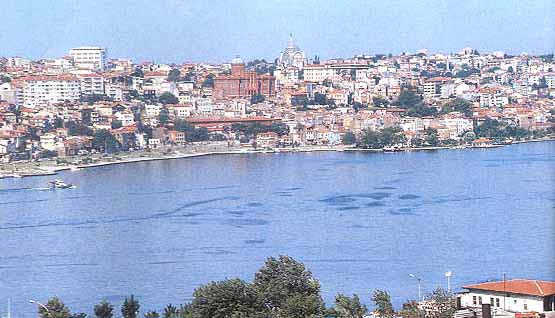
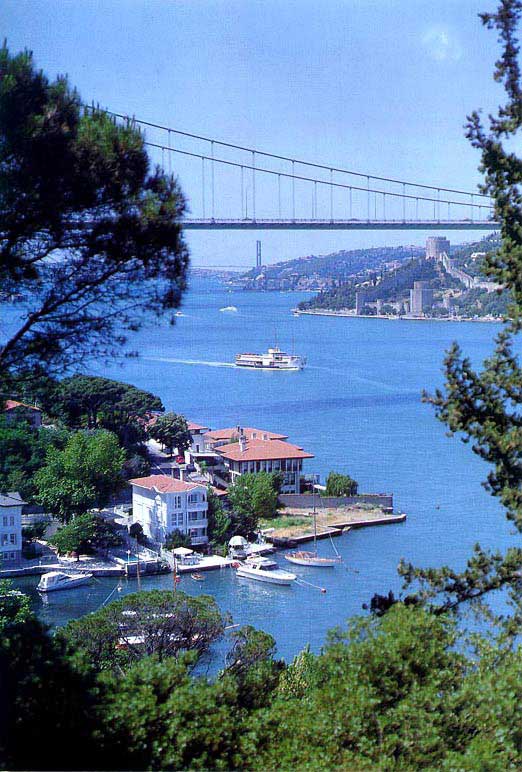
 The Fener Greek Partriarchy
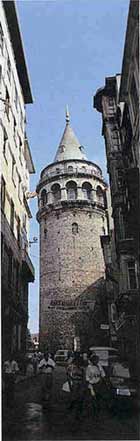
 The Galata Tower